
Define your token utility model
Before writing a single line of smart contract code, you must decide what the token actually does. In 2026, the line between a simple reward point and a security is thinner than ever. Your strategy hinges on this classification, because it dictates everything from your legal compliance to how users interact with your brand.
Utility tokens: Access and redemption
Utility tokens are the safest entry point for most brands. These tokens function as digital keys that unlock specific benefits, such as exclusive content, early product access, or discounted services. Unlike traditional points, which are locked in a proprietary ledger, utility tokens can often be transferred or traded on secondary markets, adding perceived value for the user.
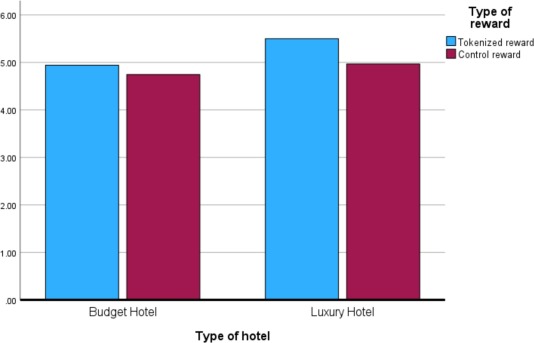
Research suggests that this tradability is the primary driver of engagement in modern loyalty ecosystems. When customers know their rewards have real-world liquidity, they are more likely to participate actively. However, you must ensure the token is strictly limited to accessing your own services to avoid being classified as a security.
Governance tokens: Voting rights
Governance tokens give holders a say in how your program operates. This might include voting on new reward categories, fee structures, or even community initiatives. While this builds a strong sense of ownership, it also introduces complexity. You need a clear framework for how votes are counted and executed.
This model works best for brands with highly engaged communities who want to co-create value. It transforms passive customers into active stakeholders. However, be cautious: granting too much power can lead to decisions that harm the brand’s long-term interests.
Security tokens: Investment potential
Security tokens represent an ownership stake or a claim on assets. If your token promises profits derived from the efforts of others, it is likely a security. This classification triggers strict regulatory requirements under securities laws in most jurisdictions, including the US and EU.
For most loyalty programs, this path is fraught with risk. The regulatory burden is heavy, and the potential for legal action is significant. Unless you have substantial legal resources and a clear exemption, avoid structuring your loyalty token as a security.
Aligning design with 2026 expectations
The landscape is shifting toward transparency and user control. Customers in 2026 expect to understand exactly how their data and rewards are used. Your token utility model should reflect this by being simple, transparent, and aligned with user value. Avoid complex tokenomics that confuse rather than empower.
Start with the user’s journey. What do they want? Access? Status? Influence? Build the token to deliver that specific value. Keep it simple. If you can’t explain the token’s purpose in one sentence, it’s too complex.
Select the right blockchain network
Choosing a blockchain for tokenized loyalty programs 2026 requires balancing transaction costs, speed, and user accessibility. Your network choice dictates the friction level for your customers. If gas fees exceed the value of a reward, engagement drops. If transactions are too slow, the experience feels broken.
Start by evaluating the technical requirements of your specific use case. Enterprise-grade programs often prioritize stability and compliance, while consumer-facing apps need near-instant finality and low costs. The following comparison highlights three dominant networks for loyalty applications in 2026.
| Network | Avg. Gas Fee | Finality | Developer Ecosystem |
|---|---|---|---|
| Ethereum L2 (Arbitrum) | <$0.01 | <2s | Large |
| Solana | <$0.001 | <1s | Growing |
| Polygon | <$0.001 | <2s | Large |
Ethereum Layer 2 solutions like Arbitrum offer a strong balance of security and cost, leveraging the Ethereum ecosystem’s maturity. Solana provides the highest throughput and lowest fees, ideal for high-frequency micro-rewards. Polygon remains a staple for brands seeking Ethereum compatibility with minimal friction.
Your decision should also consider the wallet infrastructure your users already own. Networks with widespread non-custodial wallet support reduce onboarding friction. Avoid chains that require users to bridge assets through complex, multi-step processes unless absolutely necessary for your security model.
Design the earning and redemption flow
A successful tokenized loyalty program 2026 depends on how smoothly customers earn and spend rewards. Traditional points systems often lag, creating friction that discourages engagement. By shifting to blockchain-based tokens, you enable real-time updates and immediate utility.
The user journey should feel instant. When a customer makes a purchase, the system verifies the transaction and mints tokens directly to their digital wallet. This eliminates the delay between spending and receiving rewards, making the value tangible and immediate.
1. Purchase Verification
The process begins when a customer completes a transaction. Your system must capture this event and trigger a smart contract. This step ensures that only valid purchases generate rewards, preventing fraud and ensuring accuracy.
2. Smart Contract Execution
Once verified, the smart contract automatically executes the reward logic. It calculates the token amount based on predefined rules, such as spend thresholds or product categories. This automation removes manual processing, reducing errors and operational costs.
3. Token Minting and Wallet Update
The final step is minting the tokens and updating the user’s wallet. This happens in real-time, giving the customer immediate access to their rewards. They can see their balance increase instantly, reinforcing the connection between their purchase and their reward.
The customer completes a transaction at checkout. Your backend system captures the purchase details, including the amount, items bought, and customer ID. This data is the trigger for the entire reward process.
The purchase data is sent to a smart contract on the blockchain. The contract verifies the transaction against business rules, such as minimum spend or eligible products. This ensures that only valid purchases generate tokens.
Upon successful verification, the smart contract mints the specified number of tokens. These tokens are transferred directly to the customer’s digital wallet. The customer sees their balance update instantly, providing immediate gratification.
This flow transforms loyalty from a passive accumulation of points into an active, engaging experience. Customers appreciate the transparency and speed, which drives higher retention and repeat purchases. By focusing on this seamless earning and redemption cycle, you build a stronger connection with your audience.
Integrate with existing CRM systems
The biggest hurdle in launching tokenized loyalty programs 2026 isn’t the blockchain—it’s the data silo. Your customers expect a unified experience where their digital token holdings appear alongside traditional purchase history in your existing CRM. If your team has to toggle between a blockchain explorer and Salesforce to understand a customer’s value, you’ve created friction, not loyalty.
To bridge this gap, you must map token events to standard CRM fields. Treat token transfers, staking rewards, and NFT mints as equivalent to traditional loyalty points. When a user earns a token, trigger an API call to your CRM to update their "Loyalty Balance" field. This ensures your marketing automation tools can segment users based on their Web3 activity just as easily as their email open rates.
Map token events to customer profiles
Create a middleware layer that listens for on-chain events relevant to your loyalty tier. When a user interacts with your smart contract, this layer extracts the wallet address and transaction data, then pushes a standardized record to your CRM’s customer profile. This keeps the blockchain ledger as the source of truth while maintaining the familiar interface your sales and support teams rely on daily.
Sync wallet addresses to existing IDs
Most customers won’t log in with a wallet immediately. You need a mechanism to link their wallet address to their existing customer ID (email or phone number). Implement a "Connect Wallet" button in your loyalty dashboard. Once connected, the system should permanently associate that wallet with their CRM record. This allows you to track their on-chain behavior across sessions without requiring them to authenticate every time they earn a reward.
Maintain legacy workflows
Don’t force your staff to learn Solidity. The integration should be invisible to your current operations. If your CRM can send an email when points are added, it should do the same when tokens are minted. By treating tokenized loyalty programs 2026 as a data format rather than a new operational model, you preserve your existing workflows while unlocking the transparency and immutability of blockchain technology.
Address security and compliance risks
Tokenized loyalty programs 2026 introduce new attack vectors that traditional points systems never faced. If you skip foundational security checks, a single exploit can drain user assets and destroy brand trust overnight. Treat your smart contracts like bank vaults: they must be tested repeatedly before opening the doors.
Audit your smart contracts
Before deploying to mainnet, engage a reputable third-party firm to audit your code. Automated scanners catch low-hanging fruit, but human auditors find complex logic errors that could allow token minting exploits or unauthorized transfers. Look for firms with public track records in fintech or loyalty sectors.
Verify regulatory classification
Tokens often fall under securities laws depending on how they are structured and sold. Consult legal counsel early to determine if your tokens are considered utility or securities in your target jurisdictions. Non-compliance can lead to fines or forced program shutdowns. Ensure your terms of service clearly define token ownership and redemption rights.
Implement wallet safeguards
Require multi-signature wallets for administrative functions and set transaction limits for high-value redemptions. Educate users on securing their private keys, as lost keys mean lost rewards with no customer support recovery. Consider integrating social recovery options for non-custodial wallets to reduce friction for mainstream users.
Launch and measure program success
Before going live, run through this final readiness checklist. Skipping these steps is the most common reason tokenized loyalty programs 2026 initiatives stall after launch.
-
Audit smart contract security and gas limits
-
Verify KYC/AML compliance for token distribution
-
Test wallet onboarding flow on mobile devices
-
Confirm customer support team understands token mechanics
-
Set up real-time analytics dashboards for redemption rates
Once live, track these three metrics to evaluate effectiveness:
- Active Wallets: The number of unique wallets interacting with your program weekly. This measures true adoption, not just sign-ups.
- Redemption Velocity: How quickly tokens are spent. Fast velocity indicates strong perceived value; slow velocity suggests low engagement.
- Retention Lift: Compare the repeat purchase rate of token holders versus non-holders. This proves the program’s impact on loyalty.
Avoid vanity metrics like total tokens minted. Focus on behavior change.
Common questions about tokenized loyalty programs 2026
How do tokenized loyalty programs 2026 differ from traditional points?
Traditional points systems are siloed and static. Tokenized loyalty programs 2026 use blockchain to create liquid, interoperable assets. Members can trade, gift, or combine tokens across partners, turning passive points into active currency that drives higher engagement.
What are the main loyalty program trends in 2026?
Brands are shifting from static points to hyper-personalization and real-time rewards. Programs now leverage AI to adjust offers instantly based on behavior, moving away from one-size-fits-all tiers toward dynamic, token-based incentives that respond to individual customer value.
Is regulatory compliance a major hurdle for tokenized loyalty?
Regulatory risk remains the primary barrier. Brands must navigate securities laws and anti-money laundering (AML) rules that vary by region. Success requires careful token design—often using non-transferable utility tokens—to avoid classification as a security while maintaining operational flexibility.
No comments yet. Be the first to share your thoughts!