
Define your token utility first
Before writing a single line of smart contract code, determine what the token actually does for the user. Successful implementations start with clear user value, not just technological novelty. If the token offers no advantage over traditional points, customers will ignore it.
The primary differentiator is tradability. Unlike traditional loyalty programs where rewards are locked into a closed loop for future purchases, tokens can be traded, sold, or transferred. This transforms points from a static discount into a liquid asset with real-world value.
When defining utility, choose one of two paths:
- Redemption: Tokens are exchanged for goods, services, or exclusive experiences within your ecosystem. This maintains brand control but limits perceived value.
- Tradability: Tokens are convertible to other cryptocurrencies or fiat on external exchanges. This maximizes user engagement and perceived value but requires compliance with financial regulations.
Clarity here dictates your technical stack. A simple redemption model might run on a private ledger, while a tradable asset requires a public blockchain like Ethereum or Solana. Define the utility first; the technology will follow.
Choose the right blockchain layer
The blockchain you pick determines whether your program feels like a frictionless perk or a technical hurdle. Your choice primarily comes down to Layer 1 (L1) versus Layer 2 (L2) networks. L1s like Ethereum offer maximum security but often suffer from high gas fees that can eat into your reward margins. L2s like Arbitrum or Optimism process transactions faster and cheaper by bundling them off the main chain.
To make the right call, weigh three factors: transaction costs, speed, and user onboarding friction. If your program involves high-frequency micro-rewards, L2 is almost certainly the better fit. For high-value, infrequent redemptions, an L1 might provide the security baseline your enterprise requires.
Use the table below to compare the operational differences. This comparison focuses on the metrics that directly impact your loyalty program's viability and user experience.
| Metric | Layer 1 (e.g., Ethereum) | Layer 2 (e.g., Arbitrum) |
|---|---|---|
| Transaction Cost | High ($2-$20+ per tx) | Low ($0.01-$0.10 per tx) |
| Speed | Slower (15-30s) | Faster (<1s finality) |
| User Onboarding | High friction (gas fees) | Lower friction (meta-transactions) |
| Security Model | Maximum (base layer) | High (inherits L1 security) |
Start by calculating your average monthly transaction volume. If you plan to issue thousands of small rewards, the cumulative gas fees on an L1 will quickly become unsustainable. L2s allow you to offer instant, cheap points that feel like traditional credit card rewards, removing the crypto-specific friction that often deters mainstream users.
Consider also how you will handle user onboarding. Many L2 solutions support account abstraction, allowing users to sign in with email or social accounts while the backend handles the complex wallet interactions. This approach keeps the loyalty program accessible to non-crypto natives while still leveraging the transparency and transferability of blockchain assets.
Design the token economics model
Building a sustainable economic engine requires more than just minting a reward; it demands strict supply rules and inflation controls to prevent devaluation.
Set a Fixed or Capped Supply
Start by defining the total number of tokens that will ever exist. A fixed supply creates scarcity, which can drive value up if demand grows. However, for most brands, a capped supply is more practical. It allows for some flexibility while still signaling that the reward has a hard limit. This prevents the "infinite money glitch" problem where rewards are printed endlessly, diluting their worth.
Implement Controlled Inflation
Instead of a static supply, consider a controlled inflation model. This means tokens are released into circulation at a predictable rate, tied to user activity or brand performance. The goal is to match token issuance with the actual value being delivered. If you issue tokens faster than customers earn them through purchases, you create a surplus that drives down value. Align issuance with revenue or engagement metrics to keep the economy balanced.
Add Deflationary Mechanisms
To counteract inflation, introduce deflationary mechanisms that remove tokens from circulation. Common methods include burn fees (where a portion of transaction fees destroys tokens) or lock-up periods (where users must hold tokens for a set time to unlock higher tiers). These features reduce the circulating supply, supporting the token's price and encouraging long-term engagement rather than quick cashing out.
Monitor and Adjust
Token economics are not set-and-forget. You must monitor key metrics like circulating supply, velocity, and holder distribution. If you notice rapid inflation or a drop in redemption rates, adjust the parameters. Regular audits ensure your model remains aligned with business goals and user expectations.
Build the smart contract infrastructure
Building a solid on-chain foundation requires deploying a smart contract that manages token issuance, distribution, and redemption. This section walks through the technical sequence for deploying ERC-20 or ERC-1155 tokens with automated distribution.
Decide between ERC-20 and ERC-1155. ERC-20 is standard for fungible rewards like points. ERC-1155 is better if you want to issue unique digital collectibles or tiered membership badges alongside standard points. ERC-1155 also reduces gas costs when issuing multiple asset types in a single transaction.

Write the contract in Solidity using OpenZeppelin’s verified libraries. Include functions for mint (issuing rewards) and burn (redeeming them). Ensure you implement a transfer restriction so tokens can only move between approved wallets and your redemption portal. This prevents unauthorized trading and keeps the ecosystem controlled.

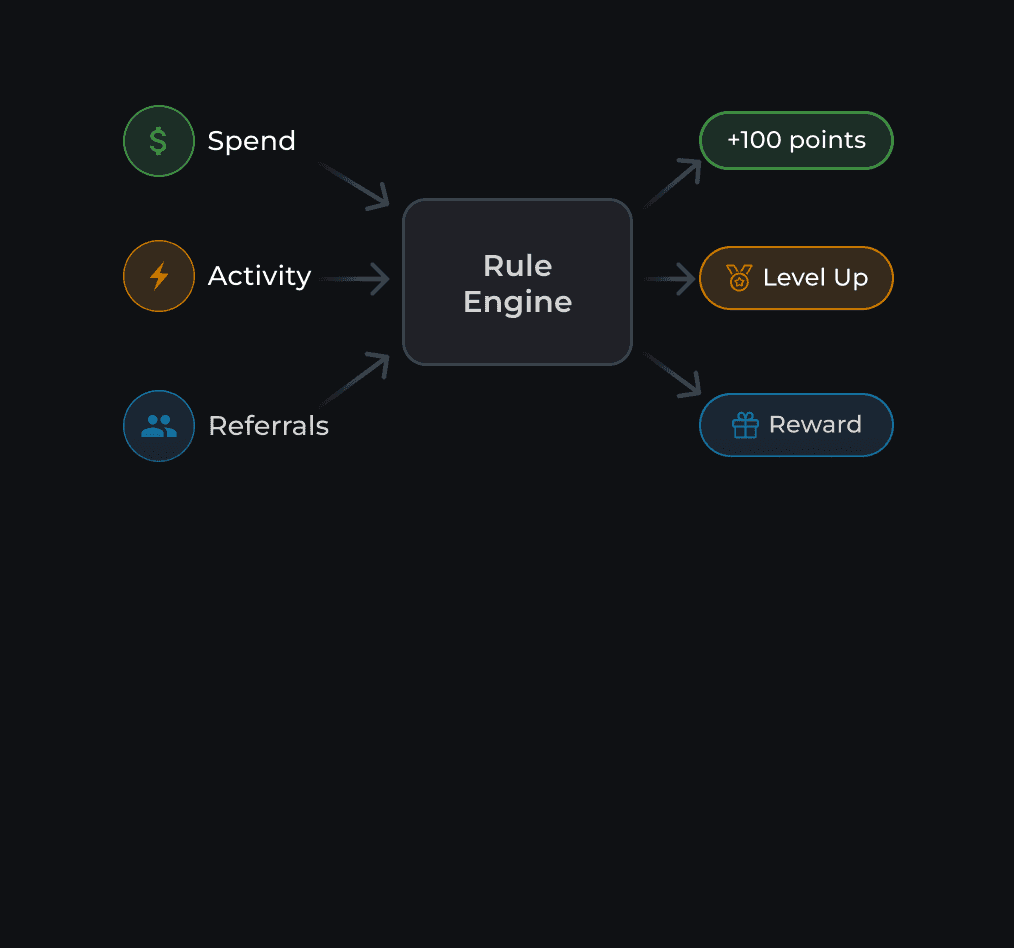
Integrate an oracle or off-chain trigger to automate reward distribution. When a user completes a qualifying action (e.g., a purchase), the system calls the contract’s mint function. This removes manual overhead and ensures instant, transparent reward crediting. You can also add vesting schedules if rewards should unlock over time.
Deploy your contract to a layer-2 network like Polygon, Arbitrum, or Base. Mainnet Ethereum gas fees are too high for micro-rewards. A low-cost chain ensures your users can redeem small point values without paying more in fees than the reward is worth. Verify your contract on Etherscan or the relevant block explorer for transparency.

Before going live, run extensive tests on a testnet like Sepolia or Mumbai. Simulate user sign-ups, reward earning, and redemption flows. Check for edge cases, such as what happens if a user tries to burn more tokens than they hold. Use automated testing tools like Hardhat or Foundry to catch bugs before deployment.
Integrate wallet onboarding flows
To make tokenized loyalty viable for mainstream users, you must remove the friction of crypto custody. Non-crypto natives will abandon your program if they have to manage seed phrases or navigate complex wallet interfaces. The goal is to make the blockchain invisible behind a familiar user experience.
Start by integrating social login providers (Google, Apple, or email) that automatically generate a non-custodial wallet in the background. This approach, often called "wallet-as-a-service," allows users to claim tokens using credentials they already trust. The underlying blockchain interaction happens silently, preserving security while mimicking a standard app sign-up.
Leverage account abstraction to batch multiple actions into a single transaction. Instead of forcing users to pay gas fees in native tokens, you can sponsor transactions on their behalf or allow them to pay gas with stablecoins or loyalty points. This removes the need for users to hold cryptocurrency just to interact with your loyalty program.
Do not overwhelm new users with all features at once. Start with a simple "earn" flow where users receive tokens for a purchase. Only introduce "spend" or "transfer" capabilities after the user has successfully claimed their first reward. This gradual exposure builds confidence and reduces the perceived risk of handling digital assets.
Crypto transactions are irreversible. Your onboarding flow must include clear warnings about transaction details and easy access to customer support for failed states. Implement a "safe mode" that requires confirmation for large transfers or new beneficiary additions, protecting users from accidental losses or social engineering attacks.
By abstracting the complexity of keys and gas fees, you create a frictionless entry point. This strategy ensures that the benefits of tokenized loyalty—transparency, interoperability, and ownership—are accessible to everyone, not just crypto enthusiasts.
Launch and monitor retention metrics
Tracking the performance of tokenized loyalty programs requires merging on-chain transparency with traditional business intelligence. Unlike static point systems, tokens generate a verifiable digital trail that simplifies attribution. You can now see exactly how many holders convert to buyers, how long they stay active, and which rewards drive the most engagement.
Start by defining your core KPIs before you go live. Focus on holder-to-customer conversion rates, token velocity (how often they are traded or spent), and churn reduction. Set up dashboards that pull data from your blockchain explorer and integrate it with your CRM. This unified view prevents data silos and gives marketing teams real-time feedback on campaign effectiveness.
Use a pre-launch checklist to ensure your tracking infrastructure is ready. Verify that your smart contract events are emitting the correct data points and that your analytics tools are configured to parse them accurately.
-
Map token transfers to user accounts in your CRM
-
Set up dashboards for holder conversion and churn rates
-
Configure alerts for unusual token velocity or bot activity
-
Test end-to-end tracking with a small beta group
Monitor these metrics weekly during the first quarter. Look for patterns in how users interact with the tokens. Are they holding for status, or spending immediately? This behavioral data allows you to tweak reward structures dynamically, keeping the program relevant and engaging as the market evolves.
Common questions about tokenized loyalty programs
Tokenized loyalty programs face unique regulatory and technical hurdles. Before launching, address these specific concerns to avoid compliance traps.
No comments yet. Be the first to share your thoughts!