
What tokenized loyalty means in 2026
Tokenized loyalty programs replace traditional points databases with blockchain-based digital assets and smart contracts. Instead of storing rewards in a company’s internal silo, these programs issue tokens on a public or permissioned ledger. This shift moves rewards from closed systems to transferable, interoperable assets that function more like currency than static points.
In a traditional model, points are trapped within a single brand’s ecosystem. Tokenized loyalty breaks these walls down. Customers earn rewards that can be redeemed across multiple businesses on the same network, provided those partners accept the token. This interoperability increases the perceived value of rewards for consumers and reduces the friction of redemption.
The underlying technology relies on smart contracts to automate issuance and redemption. These self-executing agreements remove the need for manual reconciliation between partners, lowering administrative costs and reducing errors. As the 2026 tokenization landscape matures, this infrastructure allows brands to create liquid reward economies where points can even be traded or sold on secondary markets, provided regulatory frameworks allow.
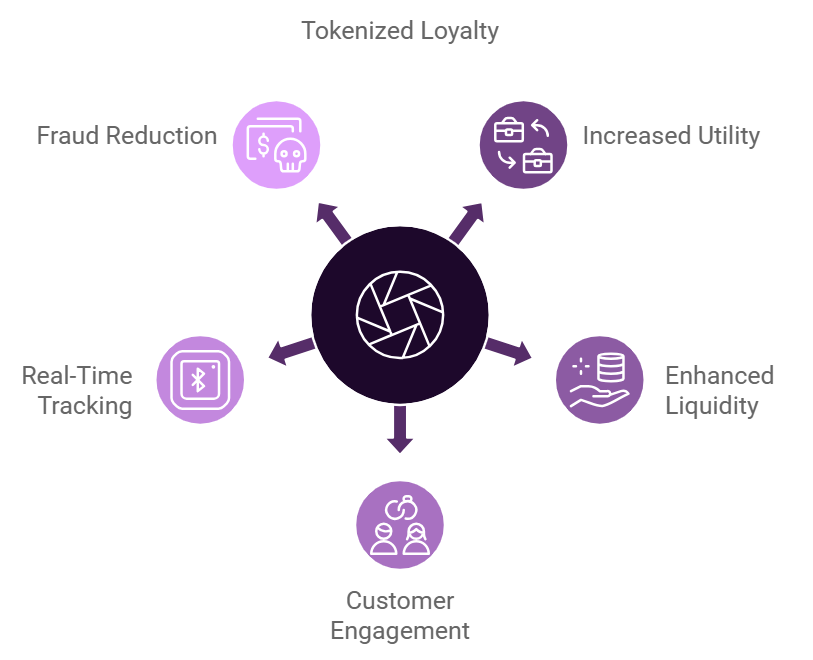
This evolution transforms loyalty from a marketing expense into a dynamic asset class. By leveraging blockchain’s transparency and security, companies can offer real-time tracking and immutable records of reward transactions, building greater trust with their customers.
Tokenized loyalty ROI calculator
Estimating the financial impact of switching to tokenized rewards requires balancing retention gains against issuance costs. While 78% of Fortune 500 companies are piloting blockchain-based tokenization, the actual return depends on your specific unit economics. This calculator helps you model the break-even point by factoring in customer volume, average order value, and the marginal cost of token issuance.
Adjust the inputs below to see how retention lift impacts your bottom line. The formula accounts for the reduced churn costs typically associated with higher engagement, offset by the platform fees and token minting expenses.
Real-time analytics for retention
Traditional loyalty programs operate on a lag. Brands typically wait for monthly reports to see which rewards are popular and which customers are churning. By the time the data is processed, the opportunity to intervene has passed. Tokenized loyalty changes this dynamic by enabling real-time tracking of token movement and redemption on the blockchain.
Every transaction, transfer, or redemption is recorded instantly. This visibility allows brands to adjust strategies immediately. If a specific reward tier sees a sudden drop in engagement, marketing teams can pivot campaigns within hours rather than weeks. This agility helps maintain customer interest and reduces churn.
Real-time data allows for dynamic reward adjustments, reducing churn by 15-20% in pilot programs.
The underlying technology transforms static points into active assets. As Photon notes, tokenization supercharges traditional systems by making rewards transferable and instantly verifiable. This immediacy builds trust and encourages more frequent interactions, as customers see the direct value of their engagement without delay. The result is a loyalty loop that responds to customer behavior as it happens, not after the fact.
Comparing blockchain loyalty platforms
Choosing the right infrastructure determines whether your tokenized loyalty program becomes a flexible asset or a siloed database. In 2026, the market favors platforms that prioritize interoperability and regulatory clarity over pure novelty. The following comparison focuses on three distinct approaches: Chainlink’s oracle-led interoperability, Ripple’s institutional-grade settlement, and TokenD’s dedicated loyalty infrastructure.
Chainlink: Interoperability First
Chainlink does not issue loyalty tokens itself but provides the critical infrastructure that allows them to move across blockchains. Its CCIP (Cross-Chain Interoperability Protocol) enables loyalty programs to bridge points between different ledgers securely. This is vital for brands aiming for cross-ecosystem redemption without managing multiple private ledgers.
Ripple: Institutional Compliance
Ripple’s network is built for high-volume, low-cost transactions with a focus on regulatory compliance. Its existing relationships with financial institutions make it a safer choice for banks and large retailers entering tokenized loyalty. While less flexible for consumer-facing dApps, its settlement layer ensures that loyalty points behave like stable, auditable assets.
TokenD: Dedicated Loyalty Infrastructure
TokenD offers a purpose-built solution specifically for tokenized loyalty programs. It provides a complete ecosystem for creating, managing, and redeeming proprietary tokens. This approach is ideal for brands that want full control over their tokenomics without building custom smart contracts from scratch.
| Platform | Primary Focus | Cross-Chain | Regulatory Readiness | Best For |
|---|---|---|---|---|
| Chainlink | Interoperability | High | Medium | Cross-ecosystem redemption |
| Ripple | Settlement | Low | High | Banks and large retailers |
| TokenD | Loyalty Infrastructure | Medium | Medium | Proprietary token programs |
The right choice depends on your integration strategy. If your goal is to let customers spend points anywhere, Chainlink’s interoperability is unmatched. For regulated financial institutions, Ripple’s compliance framework reduces legal risk. For brands wanting a turnkey loyalty token, TokenD’s specialized tools offer the fastest path to launch.
Implementation checklist for 2026
Launching a tokenized loyalty program requires moving beyond standard retail logic into regulated financial infrastructure. The 2026 landscape demands rigorous compliance and technical precision, as tokenized rewards often blur the line between points and securities. Follow this phased checklist to ensure a successful launch.
Before writing code, determine if your tokens qualify as securities or utility assets. Consult legal experts to navigate KYC/AML requirements and consumer protection laws. Misclassification can lead to severe regulatory penalties, so prioritize this step above all others.
Choose a network that balances transaction speed, cost, and user accessibility. Ethereum offers security but high gas fees, while layer-2 solutions or dedicated loyalty chains may provide better scalability for retail volume. Your choice dictates the user experience and operational costs.
Define the token’s utility, supply cap, and redemption mechanics. Will tokens be non-transferable or tradable? Ensure the economic model prevents inflation and maintains value perception. Clear rules on earning and burning tokens are essential for long-term program health.
Write secure smart contracts that automate reward distribution and redemption. Engage third-party auditors to identify vulnerabilities before deployment. A single exploit can destroy customer trust and result in significant financial loss, making rigorous testing non-negotiable.
Onboard users with a seamless wallet integration or custodial solution. Market the unique benefits of tokenized rewards, such as interoperability and transparency. Focus education on how to claim and use tokens, reducing friction for non-crypto-native customers.
Frequently asked: what to check next
What is the tokenization trend in 2026?
The tokenization market is growing fast but remains uneven. A recent report tracked roughly $60 billion in tokenized real-world assets across more than 7,000 products. While the sector is expanding, it is still heavily concentrated in specific asset classes like treasuries, with loyalty programs representing an emerging, high-potential niche within this broader shift.
What is tokenized loyalty?
Tokenized loyalty converts traditional rewards into digital tokens. Customers earn these tokens for purchases, but unlike points, they can often redeem them with any business on the platform that accepts the token. This interoperability transforms loyalty from a closed-loop system into a flexible, tradeable currency.
What are the most successful loyalty programs?
Success in 2026 hinges on interoperability and clear value. Programs that allow seamless redemption across partner brands outperform closed-loop systems. The most effective designs prioritize ease of use and transparent token value, ensuring customers see immediate, tangible benefits rather than complex, restricted point structures.
What's the best tokenization platform?
The "best" platform depends on your integration needs and target audience. Look for platforms offering robust API support, strong security compliance, and a growing network of redeeming partners. Evaluate options based on their ability to handle high transaction volumes and their track record in regulatory compliance for financial instruments.
No comments yet. Be the first to share your thoughts!