
Why tradability changes the loyalty math
Traditional loyalty programs operate as closed-loop systems. Points are essentially restricted currency, redeemable only within a specific brand’s ecosystem. This limitation creates a high friction barrier: if a consumer doesn’t plan to return to the brand, the points have zero utility and effectively zero value. Tokenized loyalty programs disrupt this model by converting rewards into liquid digital assets. As noted in recent research on tokenizing loyalty programs, this shift introduces tradability, allowing customers to sell, swap, or hold their rewards on secondary markets (SSRN, 2025).
This liquidity fundamentally alters the perceived value of rewards for consumers. A point that can be exchanged for another brand’s currency, a cryptocurrency, or fiat money is no longer a dormant promise—it is an asset. This flexibility increases the urgency to earn and the satisfaction of redemption, as users are no longer locked into a single merchant’s inventory or pricing fluctuations. The reward becomes portable, giving the consumer actual ownership rather than a conditional license.
For brands, this shift opens new revenue streams and engagement metrics. When rewards are tradable, they gain market visibility. Every transaction on a secondary exchange serves as a promotional touchpoint, exposing the brand’s token to new audiences who may not have otherwise engaged. The ability to track on-chain behavior provides richer data on customer preferences and spending power, allowing for more precise marketing strategies. The loyalty program transitions from a cost center to a dynamic financial instrument.
Interoperability across closed-loop systems
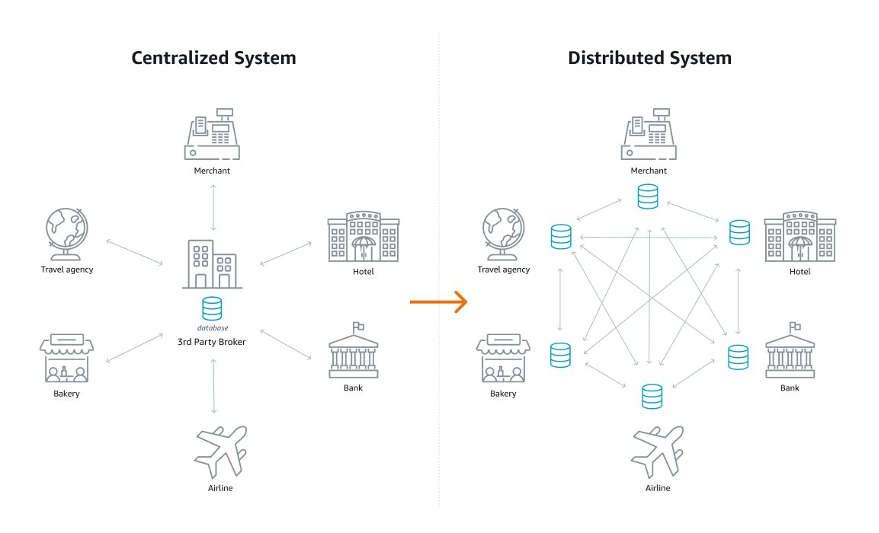
Traditional loyalty programs operate like walled gardens. A point earned at one retailer is useless at another, creating fragmented value that rarely moves beyond a single brand's ecosystem. Tokenized loyalty breaks down these silos by converting rewards into digital assets that can be transferred, traded, or redeemed across different platforms.
This shift from points to assets fundamentally changes the utility of rewards. Instead of being trapped in a closed loop, customers can now use rewards from one brand in another ecosystem. For example, airline miles might be exchanged for retail discounts or digital goods, creating a more fluid and valuable currency for the consumer.
The result is increased retention and higher engagement. When rewards have real-world utility beyond a single merchant, customers are more likely to participate actively. This interoperability turns loyalty programs from a marketing cost center into a dynamic asset class.
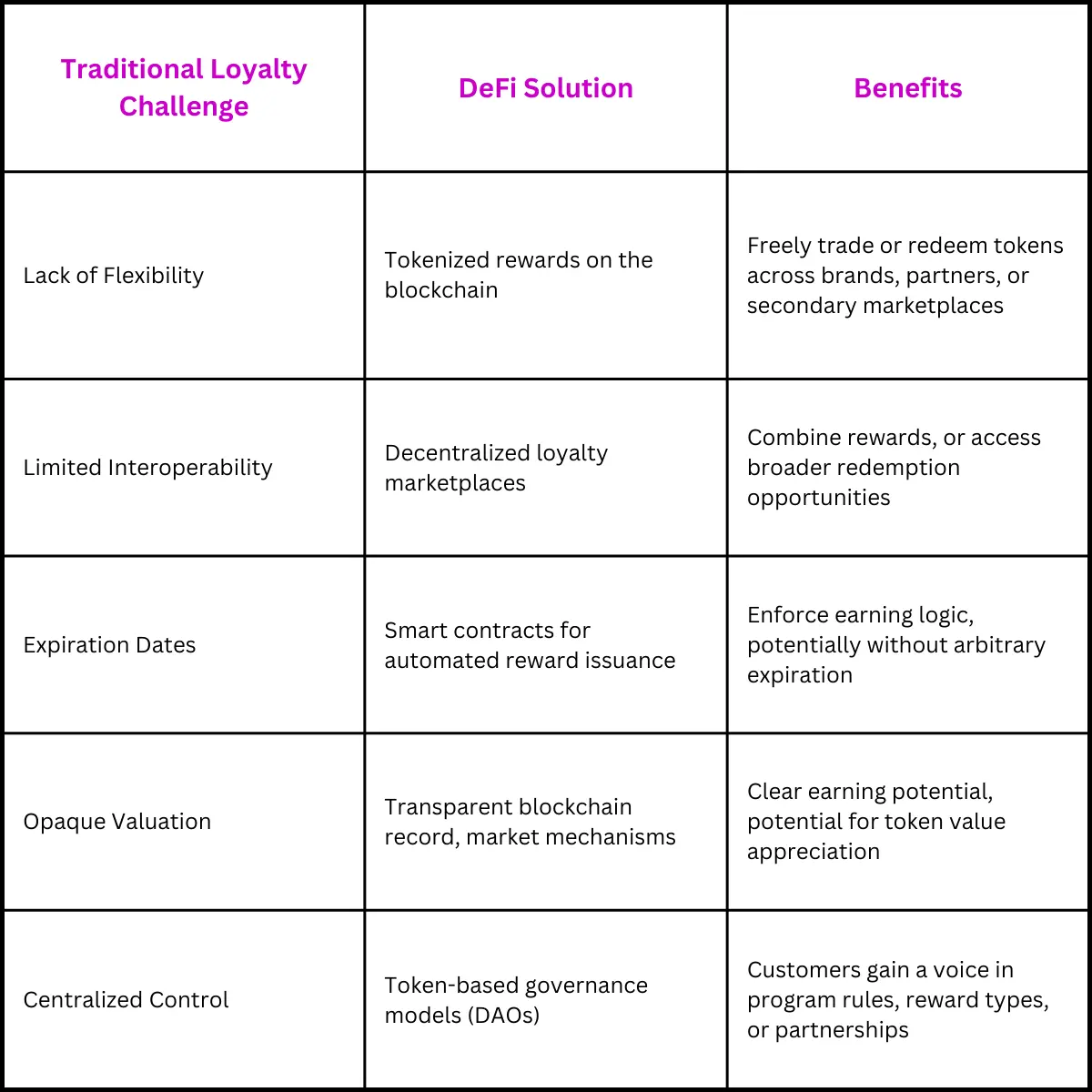
| Feature | Traditional Loyalty (Points) | Tokenized Loyalty (Assets) |
|---|---|---|
| Liquidity | Low; fixed to one brand | High; transferable across platforms |
| Interoperability | None; closed-loop only | Cross-ecosystem usage |
| Transparency | Opaque; complex rules | On-chain; verifiable |
| Redemption | Limited to merchant catalog | Flexible; open market |
Source: Photon, "Tokenization: Supercharging the Traditional Loyalty System"
Why Interoperability Matters
Interoperability is the primary driver of value in tokenized loyalty. It allows rewards to function like a universal currency rather than a restricted voucher. This flexibility increases the perceived value of the reward, making it more attractive to customers.
For businesses, this means tapping into a broader network of potential redemptions. Instead of competing solely within their own industry, they can participate in a wider economy of rewards. This creates new opportunities for partnerships and cross-promotion.
The move toward interoperability is not just a technological upgrade; it is a strategic shift. Brands that embrace this model will likely see higher customer lifetime value and stronger loyalty. Those that remain in closed loops risk losing relevance in a market that increasingly demands flexibility and utility.
Market growth in health and retail sectors
Tokenized loyalty programs are no longer experimental pilots. The health sector is leading this shift, with the tokenized health loyalty programs market valued at USD 1.82 billion in 2026 and projected to reach USD 4.03 billion by 2030, growing at a 22% CAGR [src-serp-7]. This scale signals a structural move from points to assets, driven by the need for interoperable, secure, and user-controlled rewards in highly regulated industries.
Retail is following suit, leveraging blockchain to create transparent, frictionless loyalty ecosystems. As brands tokenize their loyalty currency, they are unlocking new revenue streams through secondary marketplaces and dynamic pricing models. The convergence of health and retail loyalty programs highlights a broader trend: loyalty is becoming a tradable, liquid asset class rather than a static discount mechanism.
Implementation challenges and regulatory risk
Moving from legacy SQL databases to blockchain infrastructure is not merely a technical upgrade; it is a fundamental shift in liability. Brands that treat tokenized loyalty programs as simple digital points often underestimate the regulatory weight of the asset they are issuing. When a reward becomes a tradeable token, it may fall under securities laws, tax codes, and consumer protection regulations that traditional loyalty programs avoid entirely.
The most significant hurdle is determining whether your token constitutes a security. In the United States, the Howey Test remains the primary benchmark. If customers purchase tokens with the expectation of profit derived from the efforts of others, the program is likely a security. This classification triggers rigorous registration requirements with the Securities and Exchange Commission (SEC). Even in jurisdictions without explicit crypto laws, existing financial regulations can be interpreted to cover tokenized rewards, exposing brands to severe penalties or forced program shutdowns.
Technical implementation adds another layer of complexity. Traditional enterprise systems are built for centralized control and immediate reversibility. Blockchain systems are immutable and decentralized. Integrating these two worlds requires robust middleware to handle real-time settlement, identity verification (KYC/AML), and gas fee management. A single bug in the smart contract can lead to irreversible loss of customer assets, damaging brand trust instantly. The volatility of underlying crypto assets means brands must hedge their liabilities or peg token value to fiat, adding operational overhead.
Tax implications also shift dramatically. Issuing tokens can be treated as a taxable event for the customer, creating a massive administrative burden for both the brand and the user. Unlike traditional points, which are generally not taxed until redemption, tokens may trigger capital gains reporting requirements at every transfer or trade. Brands must build infrastructure to support tax reporting, increasing the cost of implementation.
The stakes are high because the cost of failure is existential. A regulatory fine or a security breach can erase the value of the entire program. Brands must approach tokenization with the same rigor as launching a new financial product, not a marketing campaign. This means prioritizing compliance and security over speed to market, ensuring that the infrastructure can handle the legal and technical demands of a true digital asset.
Essential tools for launching a tokenized program
Building a tokenized loyalty system requires more than a marketing concept; it demands robust infrastructure. Brands must select platforms that handle smart contract deployment, token minting, and secure wallet integration. Without reliable backend tools, points remain static data rather than transferable assets.
Choose a platform that supports ERC-20 or ERC-1155 standards for fungible and non-fungible rewards. Providers like Photon or similar enterprise-grade solutions offer white-label dashboards that allow brands to manage token supply without managing private keys directly. This reduces technical friction while maintaining security.
Your program must allow customers to hold and spend tokens. Integrate wallet providers such as MetaMask, Coinbase Wallet, or embedded custodial wallets. The user experience should abstract the blockchain complexity, ensuring customers can claim rewards without understanding gas fees or seed phrases.
Use smart contracts to automate reward distribution and redemption rules. This eliminates manual accounting errors and ensures transparency. Chainlink’s oracle networks can also feed real-world data (like purchase history) into your smart contracts to trigger token emissions accurately.
These tools transform loyalty points into liquid assets. As noted by Chainlink, blockchain loyalty programs replace traditional points databases with tokenized digital assets and smart contracts, enabling new engagement models where tokens can unlock access, track progression, or mark milestones.

As an Amazon Associate, we may earn from qualifying purchases.
No comments yet. Be the first to share your thoughts!