
Get tokenized loyalty programs right
Tokenized loyalty programs offer distinct advantages over traditional points, primarily through interoperability and true asset ownership. However, successful implementation requires balancing technological innovation with user experience. The goal is to create a system where rewards are liquid, secure, and easy to use, rather than a complex financial instrument that confuses customers.
To succeed, brands must address three core challenges: wallet friction, tokenomics complexity, and liquidity. Ignoring these factors leads to low adoption rates. This guide outlines the practical steps to design a tokenized loyalty program that works in real-world conditions, focusing on concrete implementation strategies and common pitfalls.
Work through the steps
Building a tokenized loyalty system involves defining constraints, comparing technical options, and testing the user flow. The process should prioritize simplicity and clarity. Start by identifying the primary constraint, such as budget, technical skill, or regulatory compliance. Then, compare options against this constraint to ensure the chosen path is viable outside ideal conditions.
Fix common tokenized loyalty mistakes
Tokenized loyalty programs often fail not because the blockchain is flawed, but because the implementation ignores user friction. When designing a tokenized rewards system, avoid these three critical errors that drain retention and increase support costs.
Ignoring wallet friction
Forcing users to manage private keys or gas fees for small rewards creates immediate drop-off. Most consumers abandon the process if they must bridge funds or wait for confirmations. Instead, use account abstraction or sponsored transactions. This allows the brand to pay gas fees, keeping the experience invisible to the user. For example, a hotel chain can sponsor transaction fees for loyalty redemptions, ensuring the guest only interacts with a familiar login interface.
Over-engineering the tokenomics
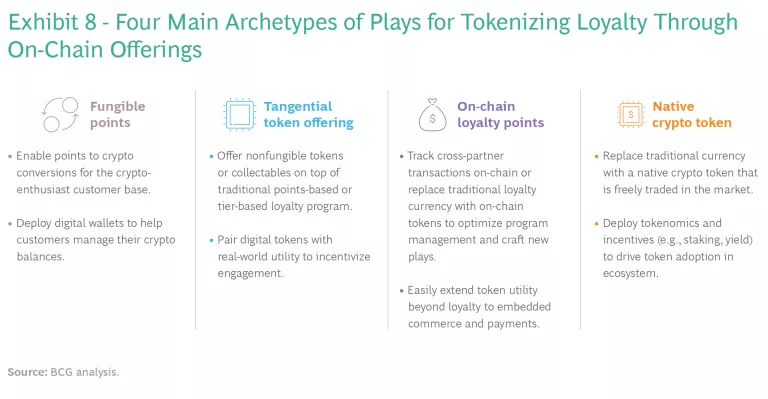
Many brands mint complex utility tokens with intricate staking mechanisms too early. This confuses users who just want a reward. Start with simple, fungible points mapped to a stable value. As Boukis (2024) notes, tokenized rewards increase booking intentions when they are straightforward. Complexity should only be added once the base user flow is habitual. For instance, begin with a 1:1 mapping of points to tokens, then introduce tiered benefits later.
Neglecting liquidity
A tokenized reward is useless if users cannot spend or trade it easily. If your program is siloed on a single private chain with no exit strategy, it becomes a closed loop. Ensure your tokens are compatible with major wallets and exchanges. This interoperability is what distinguishes true tokenization from traditional points, offering real value beyond your own ecosystem. Consider integrating with decentralized exchanges (DEXs) to allow users to trade rewards for other assets or fiat.
Tokenized loyalty program: what to check next
Addressing practical concerns helps clarify whether blockchain rewards fit your strategy. Here are the most common questions about tokenization, downsides, and program structures.
No comments yet. Be the first to share your thoughts!